
Perfectionism
The Psychology Behind Perfectionism

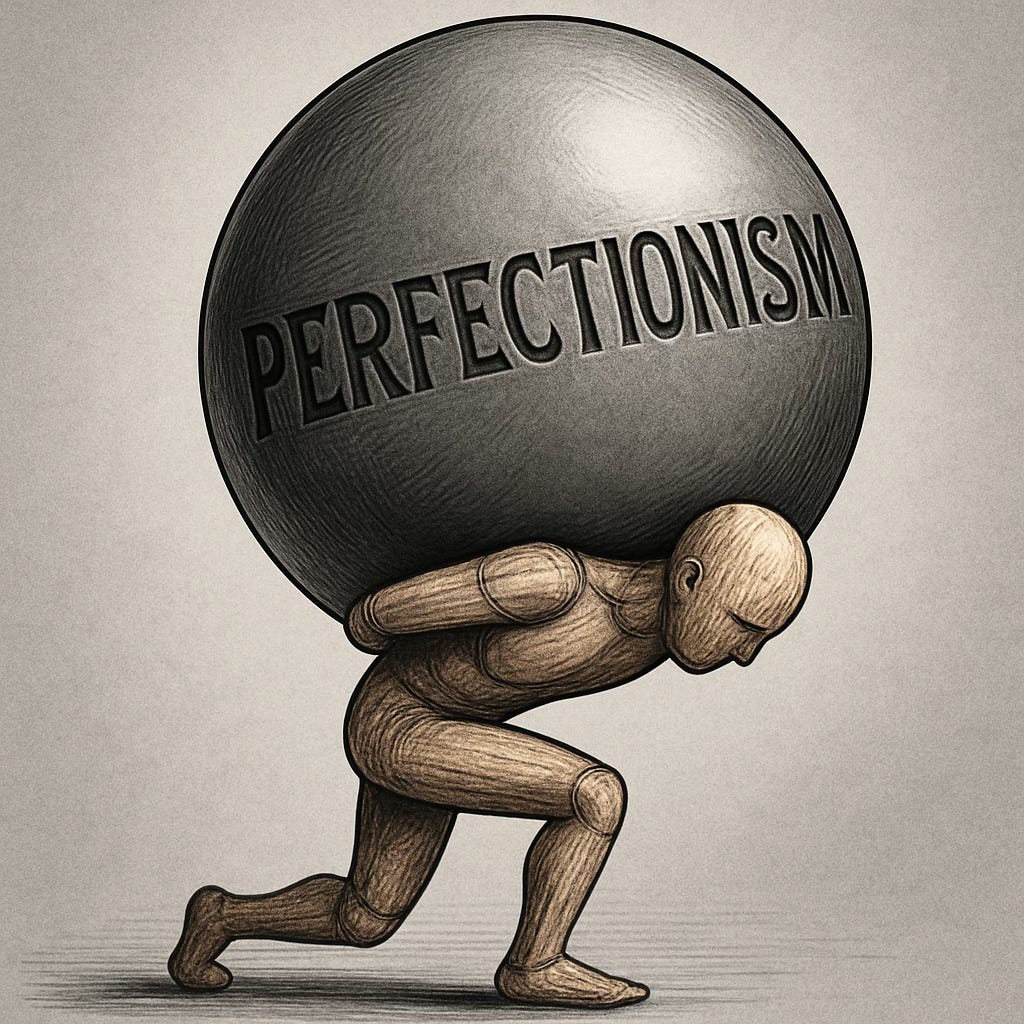
Perfectionism is broadly understood as the pursuit of extraordinarily high personal standards coupled with a tendency for harsh self-critical evaluation. Historically considered neurotic, dysfunctional and suggestive of psychopathology, perfectionism was once regarded as an unhealthy striving that undermined wellbeing. It was only in the early 1990s that research widely recognised perfectionism as a multidimensional concept. Prior to this perfectionism wasn’t considered to have any adaptive or beneficial nature. Thus, scientifically perfectionism was split into various dimensions, which have since been further grouped into two higher order dimensions - perfectionistic strivings and perfectionistic concerns. Perfectionistic strivings refers to the pursuit of exceptionally high personal standards. Perfectionistic concerns refer to the tendency to experience extreme self-criticism. Two sides of the same coin. One strives for perfection, achievement and success, while the other fears failure, is overly self-critical and is hyper concerned with the judgement of others. Whilst research has attempted to prize the two dimensions apart in an attempt to find a purely adaptive perfectionism, the two have shown to be positively correlated time and time again. Rarely do you get one without the other.
Perfectionism in sport and performance is often celebrated and revered. It means being meticulous about the details. Going the extra mile. Caring more than your peers or opponents. These can all be wonderfully beneficial. Yet, less frequently do we consider its darker side. A significant amount of research links perfectionism with a range of devastating outcomes such as depression, anxiety, eating disorders, social disconnection, burn-out and suicide ideation. Perfectionism has the capacity to be profoundly destructive.
I would like to dissect in little more depth two aspects of perfectionism that I consider relevant to most of us doing something we love, or for that matter, trying to find love in what we’re doing. First, perfectionism is linked to burnout and disengagement. If longevity and sustainability are important to you in what you’re doing perfectionism can end up being heavily counterproductive. Mastery is a process of iteration. A process of trying, failing, learning and trying again. The more positive this relationship, the more likely you are to stay the course. Perfectionism and self-criticism might be short term motivators, but they will do very little for a long, fulfilled and healthy relationship with yourself, your practice or your body.
Secondly, perfectionism tends to be negatively correlated with creativity. Some of the most joyful moments I’ve experienced have been those of great personal creativity. Psychological flexibility, openness to experience, tolerance of mistakes, flow and divergent thinking are all characteristics of highly creative people. Creativity inherently involves uncertainty, mistakes and potential failure. All things considered anathema by the perfectionist, who instead is characterised by rigid thinking and an intolerance for ambiguity. Creativity spotlights curiosity. Perfectionism, caution. For anyone wanting to be more creative, or struggling to create, working to shed the skin of perfectionism can be a vital step forward.
A confrontation with perfectionism is no easy task. Perfectionists often value their perfectionism, seeing it as integral to any success they might have had and as such as are rarely forthcoming regarding its deconstruction. They also perceive seeking support as a sign of weakness, leading to the avoidance of help-seeking behaviours. This can be particularly debilitating and insidious. We are social creatures and have a long and rich history of social learning. You were not born with the information you have now. Someone or something taught you it. Rarely are the tools that got you into a situation the same tools that are needed to get out of that situation. New tools are necessary, and they only ever come from external inputs.
So what?
An alternative to perfectionism has recently been explored in research - excellencism. Excellencism refers to the pursuit of excellence without the rigid and self-critical darker side of perfectionism. It represents a much more flexible and adaptive striving guided by growth and mastery. Not success as a means of external validation. It is about doing the best you can do. Which, at the end of the day, is all you can do. The research on excellencism as an alternative to perfectionism is new but promising.
Interestingly, self-compassion (see last month’s newsletter) directly targets core features of perfectionism such as shame and self-criticism and works to cultivate more adaptive responses to set-backs and failures. Self-compassion aims to focus on growth and learning from errors rather than the internalization of them into one’s self-concept and has shown promising results.
Together, excellencism and self-compassion appear to be valuable tools to explore when it comes to constructing a safer, healthier and more fulfilling experience whether it be with yourself, your practice or your body. Confronting perfectionism isn’t about lowering our standards and settling for less. Instead, it’s about changing the way we relate to our standards. If we want our journeys to be characterised by creativity, play, presence, growth and fulfilment - striving not for perfection, but for excellence might be the smart way to go.