
Self-Compassion?

That’s not my thing. I shall not be looking to the magical moon on the first Thursday of Aries to hope that life treats me with more kindness. Instead, I’ll be working, confronting some discomfort, growing. You can take your hippy woowoo elsewhere. Thank you very much.
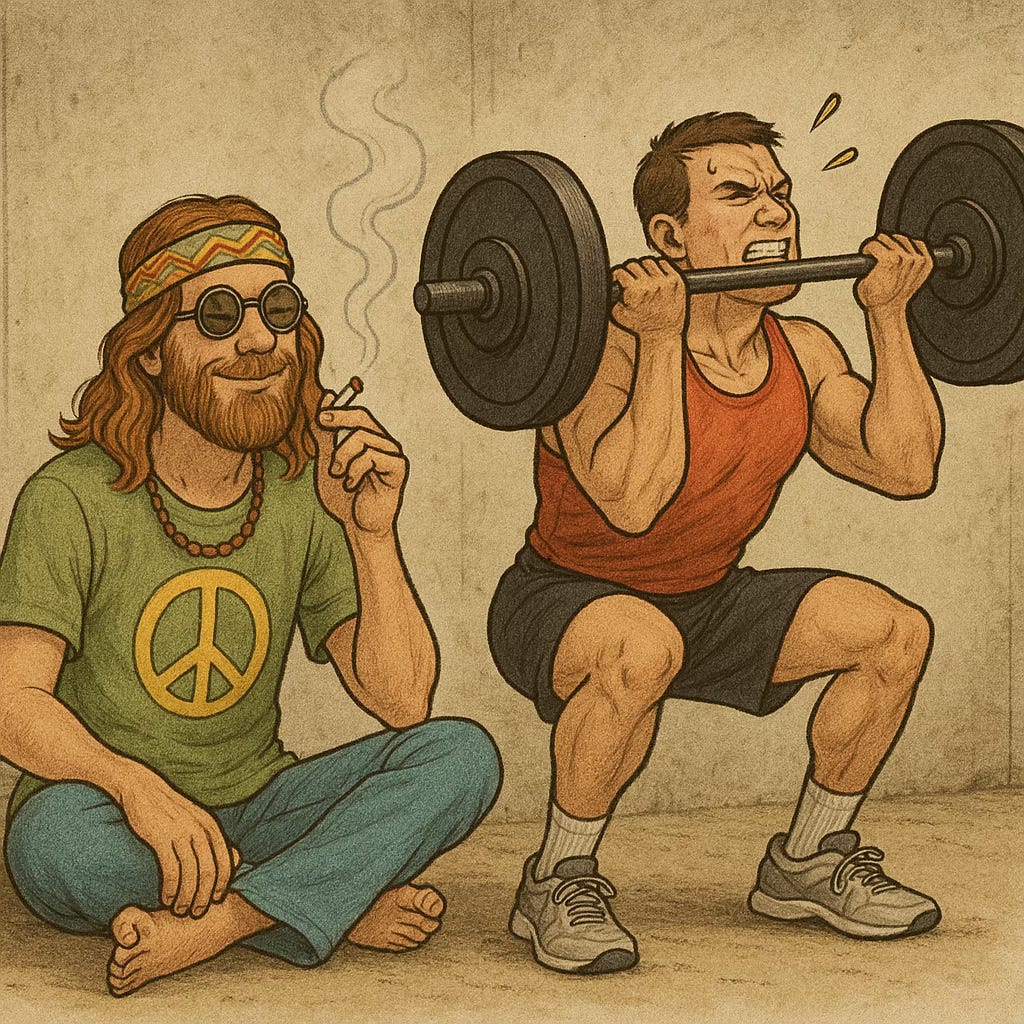
For a long time, I thought that my lack of self-compassion was my superpower. I was able to push myself harder, endure more and suffer for longer than many of my peers. I had attributed much of my progress to my capacity to self-criticize. This mentality helped me on the road to achieving some objectively difficult physical feats. That’s not to say I haven’t loved the process. But my allergy to self-compassion has meant that at times I’ve been reluctant to credit myself for hard work, celebrate wins, or gift myself grace when things haven’t gone my way. This journey has been full of flow, fire and passion. It’s also been, at times, tiresome. A lack of self-compassion has been positively correlated with self-criticism and negative self-talk. Self-criticism and negative self-talk have been fuel to the fire that has moved me along more than I might like to admit. In truth, my exploration into psychology began in a desperate attempt to find momentary refuge from this critical inner dialogue.
My therapist recently recommended me a book rather appropriately titled, “Self-Compassion”. My instinct reaction was to cringe and I laughed awkwardly. “Not a chance”, I thought. Despite my bodies visceral rejection to the suggestion, I said I would commit to the process and lean into the cringe. Subsequently, I want to explore the literature on self-compassion and performance and see what the science says. Is it worth my time? Does self-compassion help or hinder performance? For a long time, I would have said that naturally, it hinders it. Self-criticism is what drives improvement. Have I been wrong all along?
What actually is self-compassion?
According to the literature, self-compassion is about treating oneself with kindness. It’s about recognizing a shared humanity; understanding that being flawed and fucked are a part of our shared human experience. Additionally, it involves a component of mindfulness, being aware of what is happening, the pleasant and the less pleasant, without judgement. Self-compassion is not self-pity; it doesn’t mean ‘poor me’. It’s also not self-indulgence; it doesn’t mean I’ll allow myself sit on the sofa all day and consume chocolate until I’m sent into a deep serotonin snooze. My worry for a long time was that being too kind to myself would deter me from challenging myself. However, self-compassion appears to be more about supporting yourself as you would support a friend. I wouldn’t dream of attempting to motivate my friends the way I’ve often tried to push myself. I imagine many of you reading this would agree.
OK, so treating oneself like a friend. That I can get onboard with. Let’s continue.
Research.
To date, a wealth of research into the relationship between self-compassion and wellbeing has been done. Work has linked self-compassion to lower levels of depression and shame. Research in 2007 linked self-compassion to curiosity, optimism, conscientiousness and a greater desire to develop as a person. A 2015 metaanalysis of 79 studies provided evidence for a causal relationship between the two; improving self-compassion positively benefits wellbeing. There doesn’t appear to be a great deal of dispute. If you’re interested in psychological wellbeing, self-compassion is likely something worth cultivating. Yet, the question I wanted to explore focuses more explicitly on performance. What does self-compassion do for performance?
Interestingly, as I read through studies and articles a fear of self-compassion leading to mediocrity presents quite frequently; in athletes (athletes again) and gymnasts to give a few examples. There appears to be a common popular conception that mental toughness, grit and a drive to improve naturally oppose self-compassion. Have you felt this way?
In their study, Applying Self-Compassion in Sport: An intervention in Women Athletes, authors found that self-compassion linked to decreased rumination, self-criticism and fear of failure. For those familiar with research on optimal flow states, all the above contribute to one’s capacity to access such states and therefore, I would argue, directly relate to performance. In my case, rumination and fear of failure often drive me into a deep anxiety that forces me out of the present moment and distracts me from any training I might be attempting to get lost in. Interestingly, a 2020 study explored this connection and found that in elite athletes’ higher levels of self-compassion would predict increased levels of flow and decreased levels of performance anxiety. Finally, a 2021 randomised control trial explored whether self-compassion might decrease performance and cognitive anxiety in climbers. The study concluded that self-compassion led to a decrease in somatic performance anxiety e.g. sweaty hands or an increase in heart rate, helping to manage physiological arousal, compared to the control group.
Given that in high performance settings setbacks are an inevitable part of the process, coping strategies to manage these are important to develop. Infact, much research has demonstrated that optimal functioning in high level sport is dependent on an ability to cope with setbacks and stress. In one study, athletes higher in self-compassion responded in heathier ways to emotionally difficult situations compared to their less self-compassionate counterparts. In their work, “Managing injury and other setbacks in sport...” authors recommend self-compassion as a coping strategy for the inevitable tough times of high performance. In work on academics, authors found self-compassion linked to mastery goals and that more self-compassionate individuals are more inclined to see failure experiences as opportunities to learn and grow.
Blimey... I was wrong.
It appears the ability to take the path of most resistance and the ability to practice self-compassion are not in opposition; and in fact, they might even complement each other. I’m interested in performance. I’m interested in flow. I would prefer not to suffer from anxiety. I’m interested in mastery goals and growing and learning. So, [gulp] I suppose I’ll give my therapist the benefit of the doubt and give this self-compassion thing a go. Will you join me? Small steps to start. Trite it may be, but being conscious of talking to yourself, treating yourself and encouraging yourself as you would a best friend appears to be a wonderful place to begin.
Interesting read, as always bro! Maybe I've hung around too many hippies or maybe it's my supportive upbringing, but I've always had a good bit of self compassion while striving for these big goals. There's always a happy balance of trying to be better, but being kind to yourself at the same time. I think we can push ourselves with positive reinforcement rather than negative 💪